
Aimlessness = Nirvana
What Radical Behaviorism adds to a Thich Nhat Hanh teaching

“Most people cannot believe that just walking as though you have nowhere to go is enough. The Heart Sutra says that there is “nothing to attain.” We meditate not to attain enlightenment, because enlightenment is already in us. We don’t have to search anywhere. We don’t need a purpose or a goal. We don’t practice in order to obtain some high position. In aimlessness, we see that we do not lack anything, that we already are what we want to become, and our striving just comes to a halt. We are at peace in the present moment, just seeing the sunlight streaming through our window or hearing the sound of the rain. We don’t have to run after anything. We can enjoy every moment. People talk about entering nirvana, but we are already there. Aimlessness and nirvana are one.”
~ Thich Nhat Hanh
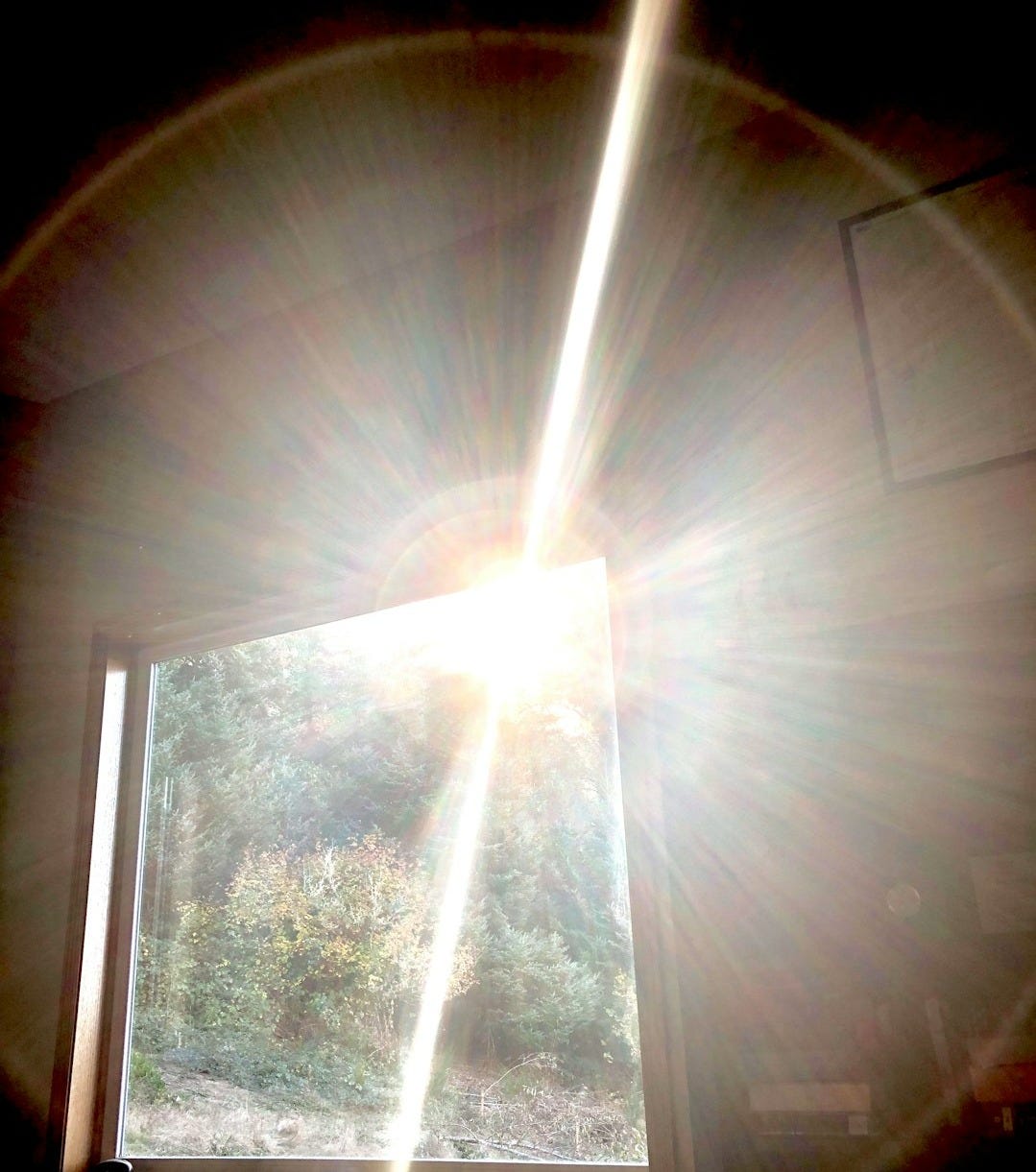
Two of my current daily struggles are what I’m doing with my writing and what I’m doing with my “career.” The word aimless is not quite right, because I do have goals for the former and wishes for the latter — namely, that they will one day be sustainable as one in the same. But, from the outside, without the kinds of products and outcomes our culture values, it probably looks like I’m aimless. No book deals. No fancy titles. Few career accolades.
So, when this quote landed in my lap, I thought, maybe it was meant for me to use as a writing prompt. And maybe my Radical Behaviorist lens will give others new ways of thinking about — and acting on — this idea that aimlessness = nirvana.
The idea that aimlessness is nirvana—that we already are what we’re trying to become—goes against almost every cultural contingency we encounter.
Western cultures bombard us with inescapable messaging that we are inherently flawed and, unless we have a path, a purpose, and products to show for it, we’re doing life wrong.
Of course, productivity has cultural value. The comforts of modern life didn’t come from idling or aimlessness. Advances in science, technology, and medicine; infrastructure, roads, indoor plumbing, air conditioning; access to varieties of food, shelter, clothing, and creature comforts — even greater empathy and tolerance for others — resulted in longer lifetimes, comfier conditions. Cultures have long conditioned their members to value productivity and advancement because our individual survival and comfort depends on it.
Radical behaviorism (or behavior analysis) helps us see how this conditioning works. At the cultural level, metacontingencies and interlocking behavioral contingencies select our shared values. At the individual level, differential reinforcement of our own behavior — throughout our lives, in countless and cumulative encounters— shapes what we attend to and reinforce, from others and ourselves. And what’s valuable to a culture — the practices that have been selected over many lifetimes— is not always beneficial to its individuals, within our lifetimes.
In simpler terms: it makes sense that cultures select productivity over idling, as we benefit greatly in our everyday lives. If members of a culture didn’t differentially reinforce behavior that led to useable advancements, it is less likely the culture would thrive in a world in which others did.
The undesirable side-effect of valuing productivity and betterment is that we learn to treat idling, or aimlessness, as undesirable. So, in our daily lives, we give more time, attention, and money to behaviors that lead to consumable products — and we ignore that which does not. It becomes do deeply engrained, we do it unconsciously, without thought or intention. We ‘mindlessly’ uphold cultural traditions that work against us.
Of course, differentially reinforcing products over process is not inherently wrong, and it’s not always detrimental to individuals; but, understanding how these practices are selected and maintained can help us change our behavior and simply be in any given moment.

Today, maybe start to notice a few things:
Notice how our culture — made up of our collective individual actions — differentially reinforces products over processes, outcomes over actions, consumption over creation. Notice, for example, how…
a finished painting is praised, while the countless sketches that built the skill are discarded
a marathon medal is admired, while the daily runs that made it possible are forgotten
an announcement about a published book earns more applause than 500 essays that never became one
Notice how, even when the behaviors are the same or more demanding, individuals within the culture attend only to the end result and ignore the behavior that made it possible. Notice how, in doing so, the process itself—time, effort, the very doing of the thing (or unrelated but beneficial things)—gets lost.
Simultaneously, and relatedly, notice how anti-aimless messaging is everywhere:
Do this! Buy this! Go here! Learn this! Be something you are not currently! Do something of purpose and value to the culture at large!
Notice how, beneath those messages is the same pressure for “betterment”, as defined by product or outcome.
When you start to bring mindful awareness to these practices of cultural conditioning, you can change them. By changing your individual behavior, you take a step towards cultural change.
So, when you see an opportunity to reinforce process, for self or others, take it. When you see “betterment” messaging, engage in aimlessness. When you catch yourself applying the trappings of anti-aimlessness to self or others, just take a step back and let yourself appreciate process. Praise a step to nowhere. Applaud staring at the wall. Share an imperfect attempt. Bask in the sunlight through the window. Walk as though you had nowhere to go. Watch your dog watch a rabbit watch the wind.
In time, with practice, we can teach ourselves to better appreciate aimless moments of process—not because they’ll add up to something later, but because they already matter now.
Thanks for reading.
Peace, love, and stimulus control,
Jennifer
To fully embrace Life, we must find meaning and contentment in the journey. If we wait for the reward at the end, we're robbing ourselves of Living Life. That pot at the end of the rainbow is always a fleeting image, and we'll never stop chasing the happiness we think is there.
I'm gonna be on the look out for those! Interesting.